I’ve been living in Emerald Hill for a little while now, and one of my favourite things about it is how easy it is to forget that you’re right beside Orchard Road.



I’ve been living in Emerald Hill for a little while now, and one of my favourite things about it is how easy it is to forget that you’re right beside Orchard Road.
*People rarely fail because they don’t know enough. They fail because lasting behaviour change is difficult.
Therefore, the coach’s role shifts from:
“Tell people what to eat”
to
“Help people consistently do what they already know they should do.”
That distinction is enormous.
*Awareness comes before change
If I had to condense PN-L1 into five behavioural principles…
They would be:
1. Awareness before intervention
Observe before changing.
2. Reduce friction
Make healthy behaviour easier.
3. Start ridiculously small
Consistency beats ambition.
4. Build identity through repeated action
You become what you repeatedly do.
5. Coach the human, not the nutrition plan
Behaviour matters more than information.
As I approach the 2-year mark of certification as well as teaching group classes weekly, here’s a reflection one of the things I love most about my teaching career so far – the freedom to design my class plans. I was working as a designer in a startup (also a career pivot) when I got my first opportunities to teach, and it struck me how much room for creativity a Pilates teacher has in this day and age.
As I continued to teach, the challenge went beyond class planning but also on being able to think on the spot and make risk-reward calculations on how to proceed with a class, given that students are all at different stages of understanding and embodiment of
the Pilates, PLUS that:
— they need to learn things
— get better at things
— understand how the things they know can evolve into the next level of challenge
All in all, it’s critical to have an intentional teaching approach
A standing warm-up is an incredibly effective way to bring your body into an active state from the get-go. By moving out of a lying position and into a vertical stance, we encourage full-body engagement, integrating both upper and lower body connections right from the start. This shift to standing gets the body prepared to stabilize and mobilize all at once, addressing both muscle activation and movement awareness.
Building Balance & Coordination
Standing warm-ups naturally incorporate balance and coordination into the routine. These movements encourage the body to find balance points, requiring both static and dynamic stabilization. Whether it’s a simple hip opener, a stretch, or a lunge with a reach, the body starts to build the neuro-muscular connections that are essential for the rest of the workout. Balance is foundational, particularly for students who may have muscular imbalances or stability issues.
Most lower back pain (non-injury related) comes down to this:
The lower back is doing work it shouldn’t be doing.
Either because:
So the lumbar spine compensates, overworks and ends up becomes painful.
Here’s a quick cheatsheet on how to manage lower back pain:
Lack of mobility in hip joints – 90/90 or Shinbox
Tightness and weakness of QL (Quadratus Lumborum) – Side Bends
Tight glutes – Pigeon Pose Variations
Weak glutes – Glute Bridge Variations
Lack of hydration in the tissues – Myofascial Release (MFR)
Weak core muscles – Core Stabilization Exercises
Lumbar spine decompression – Hip Flexor Stretch
Effective breathing forms the cornerstone of one’s practice.
Breathing impacts the entire body:
Pilates is often described as a form of exercise, but many practitioners and researchers also view it as a method of nervous system training. Beyond strength and flexibility, Pilates can influence how the brain, nervous system, and muscles communicate with one another. This is where the concepts of nervous system regulation and neuromuscular reeducation become particularly relevant.
Pilates and Nervous System Regulation
Nervous system regulation refers to the body’s ability to shift appropriately between states of activation (sympathetic nervous system) and recovery (parasympathetic nervous system).
When people are stressed, anxious, overwhelmed, or experiencing chronic pain, they often remain in a heightened state of arousal. Pilates can help create conditions that support a return to a more regulated state through several mechanisms.
1. Breath as a Regulatory Tool
Breath is central to Pilates practice.
The lateral thoracic breathing pattern commonly taught in Pilates encourages:
Slow, controlled breathing provides sensory input that signals safety to the nervous system, often helping practitioners feel calmer and more focused.
2. Focused Attention and Mindfulness
Joseph Pilates called his method “Contrology” because it emphasized conscious control of movement.
Unlike repetitive gym exercise, Pilates requires attention to:
This focused attention can reduce mental rumination and create a state similar to mindfulness practice.
From a neuroscience perspective, attention directs neural resources toward present-moment sensory information rather than stress-producing thoughts.
3. Predictable, Controlled Movement
Many Pilates exercises occur in stable, low-threat environments.
For individuals with:
Controlled movement experiences can help the nervous system relearn that movement is safe.
This concept aligns with modern pain science, which recognizes that pain is influenced not only by tissue condition but also by the nervous system’s perception of threat.
4. Improved Interoception
Interoception is the ability to sense internal bodily states.
Pilates frequently directs attention toward:
This heightened body awareness can strengthen the brain’s internal map of the body, improving self-regulation and movement control.
Pilates as Neuromuscular Reeducation
Neuromuscular reeducation is the process of improving communication between the nervous system and the muscular system.
In simple terms:
The goal is not merely stronger muscles. It is smarter movement.
What Happens During Neuromuscular Reeducation?
The nervous system continuously:
Pilates provides thousands of opportunities for this learning loop.
1. Improving Motor Control
Many clients arrive with habitual movement strategies such as:
For example:
Instead of the gluteals contributing to hip extension, the lower back may do most of the work.
Pilates exercises slow movement down enough for clients to:
The nervous system gradually adopts these patterns as new defaults.
2. Enhancing Proprioception
Proprioception is awareness of body position and movement.
Pilates equipment is particularly effective for this because springs provide constant sensory feedback.
For example:
On the Reformer:
The nervous system uses this information to refine movement accuracy.
3. Building Movement Variability
Healthy movement systems are adaptable.
Problems often arise when people become locked into one strategy.
Pilates exposes the body to:
This expands the nervous system’s movement options.
Instead of teaching a single “perfect” posture, Pilates can help clients develop a larger repertoire of successful movement solutions.
4. Reorganizing Postural Control
Posture is not simply a matter of muscular strength.
Postural control is a complex neurological process involving:
Pilates challenges postural systems through:
Over time, the nervous system becomes more efficient at organizing posture automatically.
Pilates and Pain Science
One of the most interesting modern applications of Pilates is in chronic pain management.
Research increasingly suggests that persistent pain often involves:
Pilates may help by:
This does not mean Pilates “cures” pain, but it can become part of a broader strategy that helps calm an overprotective nervous system.
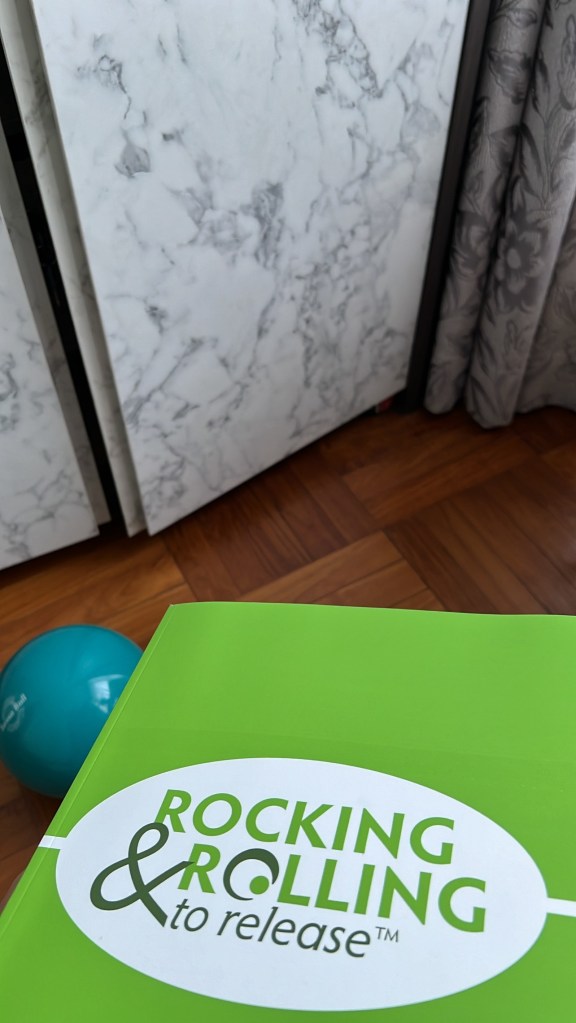


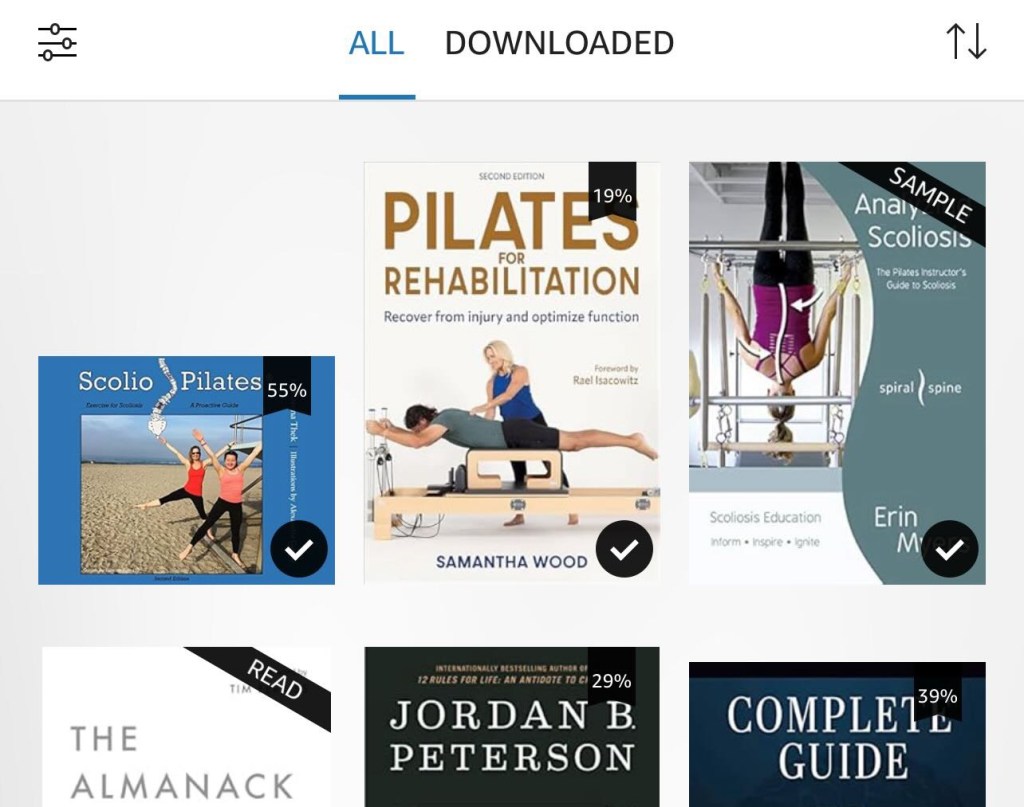
So far 2026 has been a year for continued continuing education. I’ve since enrolled in these courses:
Courses I’ve joined online:
(Update: As of July 2026, I’ve also joined a Neuropilates Level 1 training)
Many of these courses emphasize understanding why the body moves the way it does rather than forcing it into an ideal position.
Examples:
Common thread: Meet the body where it is and improve function through intelligent input.
Rather than thinking “strengthen the glutes” or “stretch the hip flexors,” these courses encourage looking at the interconnected system.
Across them you’ll find:
The question shifts from:
“Which muscle is weak?”
to:
“How is this person organizing movement?”
Although only some courses explicitly mention the nervous system, it’s a recurring principle.
The focus becomes creating conditions for better movement rather than forcing better movement.
Each course contributes to a different part of the coaching process.
Together they form a complete coaching framework rather than isolated techniques.
None of these are about teaching advanced Pilates tricks.
Instead, they all ask:
 rosalinda.blog